
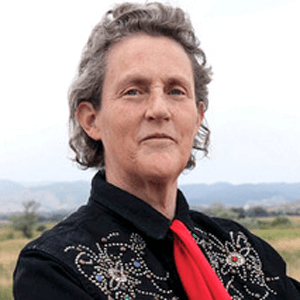
Prof Temple Grandin
Professor of Animal Science, Colorado State University.
Professor Temple Gradin is Professor of Animal Science, Colorado State University.
Watch the talk
The Power of Animals in Neurodiversity
Prof Temple Grandin, Jacqui Butcher, Will Pierce
In this inspiring talk, renowned autism advocate Prof Temple Grandin, shares her unique insights on recognising individual strengths in children with autism and teaching life skills to foster independence. She emphasises the power of shared interests, particularly with animals, to help autistic individuals build confidence and find connections. The video also features Jacqui Butcher, a young woman with KCNQ2 who loves riding horses, and Will Pierce, a young man with SCN2A-related autism, who has found joy and purpose through working with Highland cattle.
Key highlights:
- The therapeutic benefits of animals for individuals with autism
- Building on children’s strengths to foster growth and learning
- The importance of community support for individuals with special needs
This heartwarming video showcases the profound impact of recognising abilities, fostering passions, and the healing power of animals.
Read the transcript
Prof Temple Grandin: I’m Temple Grandin, Professor of animal science, and one of the things we need to be doing is look at what a individual is capable of doing. I looked very severe when I was two, three years old, screaming, constant tantrums, and my mother always encouraged my ability in art. She taught me how to read. Another kid might be really good at math, and then the math needs to be advanced. In fact, I just recently heard a very disturbing, three disturbing cases. The last few weeks, we had primary school kids, they were good at math, and they were bored with the simple math they were doing, and the teachers wouldn’t let them have harder math books.
No, we need to take the thing that the kid is good at, and build on it. They’re gonna have uneven skills, so let’s emphasize the things that they’re good at. Also, I can’t emphasize enough teaching life skills. Learning things like shopping. Also, if you have a child that sounds sensitive to maybe something like a vacuum cleaner, one of the ways you can help desensitize that is let the child turn the vacuum cleaner on and off. When they control the vacuum cleaner, they can tolerate it a whole lot better. Same thing with other noisy things like hair dryers. If the child can control it. Because if you wear headphones all the time, It’s gonna make the sound sensitivity worse. Have them with you all the time. So when you go in some of the most horrible washrooms, as you call them in Australia, you can put the headphones on for that. But if you wear them all the time, the sound sensitivity gets worse.
Well, a lot of people with autism are really good with animals. I was just reading a paper just today about service dogs and they can be really helpful. And some autistic kids have done their first words on a horse. When I was a teenager and I was bullied and teased, horseback riding was the only activity I had where I could have a friend and I wasn’t bullied and teased.
That’s another thing. Friends who shared interests. Animals are a really, really good way to have a shared interest.
Animals don’t think in words. They’re sensory based thinkers. They’re going to think in smells, touch sensations, pictures, specific sounds, like a dog, for example, can memorize the sound of a very specific car and knows when the owner’s car is coming.
Scared of little stuff we don’t notice, like a shadow on the floor, a weird shadow that’s real sharp, or a coat on a fence, something that we don’t notice, they notice. Well, if an animal gets really, really upset, really upset, 20 minutes to calm back down. I don’t care if it’s a horse. I saw two horses one time a news photographer terrified them with a drone. And I timed it. It took 20 minutes for them to calm back down and become rideable. About half an hour. You bring them into the yards and they’re upset, why don’t you take a break for half an hour and let them calm down. They’ll be easier to handle.
Sara James: We’ve got to start looking at what the kid can do. You might find my book, The Autistic Brain, helpful, because it’s got a lot of information on sensory issues, and sensory issues are real. Some individuals have problems with LED lights that flicker, they can see that flicker. And it makes it like a strobe light and some LEDs flicker and some don’t. And you can find the bad LED lights by taking a video of the room with slow motion video. You’ll find the ones that are bad when you do that. Jacqui, tell me about horseback riding.
Jacqui Butcher: It’s really fun and really short and really kind.
Andrew Butcher: What do you like about horse riding?
Jacqui Butcher: I like Simpson and Doris and Dodo and, um, Hmm.
Andrew Butcher: And are they all names of your horses? Yeah. .
Sara James: What does horseback riding do for you?
Jacqui Butcher: Well, happy and listening and fantastic.
Andrew Butcher: Do you ever feel like it’s dangerous up there on top of the horse?
Jacqui Butcher: No.
Andrew Butcher: You just have a good time up there?
Jacqui Butcher: Yeah.
Andrew Butcher: And, and who helps you?
Jacqui Butcher: Fi and Donna and Linda.
Sara James: What are the horses like?
Jacqui Butcher: Good.
Sara James: Tell me about them.
Jacqui Butcher: Mm, the horses are lovely, really kind, full and really proud
Andrew Butcher: look really proud.
Sara James: What’s it like to be up there?
Jacqui Butcher: Good fun, really fun, and really scary.
Andrew Butcher: Scary.
Jacqui Butcher: Done.
Will Pierce: My name is Will Pierce. I am 22 years old, and am the owner of WillRockU Highland Cattle Fold. I was born with a mutation of my SCN2A gene. I have never been able to speak clearly, and although I know what I want to say, I have trouble making the noises I want to make.
I learned about words and names for things by using pictures. This type of learning is still good for me. I prefer books that have pictures and words together to help me learn. Cattle see things in a similar way, and have strong visual memories of situations that make them feel safe in situations where they feel more anxious or unsafe.
I love working with cattle, particularly Highland cattle. For a long time, when I saw cattle in a paddock, it made me feel happy and calm. I particularly like Highland cattle as they are not quite as big as other breeds and tend to be calmer. When I am outside on a farm, around cattle, I don’t feel as anxious. I feel safer, particularly when I can work with cattle. I know, brushing, feeding, and having cuddles with them.
I have been very lucky to work with members of the Australian Highland Cattle Society who have taught me a lot about cattle. How to look after them and how to show them. I have been to a lot of cattle shows, and led the Supreme Champion at the Royal Canberra Show.
Since moving to Queensland, I’ve been able to work towards having my own cattle. And last November started my own Highland Cattle Fold, with two steers, Rocky and Freddie. They are named after Freddie Mercury and the Queen song, We Will Rock You. I have learned a lot over the last five months looking after Rocky and Freddie. They have been sick, and needed help settling into the Sunshine Coast, where the weather is different to the Darling Downs, where they were bred.
The team from Compass Farm help me look after Freddie and Rocky. They take me to see Freddie and Rocky each day, and support me looking after them.
Now that we have been working together for a while, Rocky and Freddie work well with me, and I brush and feed them every day. They also let me have cuddles. Having contact with them and touching and cuddling Rocky and Freddie is really important to me. It makes me feel calm and happy. I am also very proud that I have learned about how to look after cattle, and can now do that with my own cattle. It gives me confidence to do other things.
I am working towards taking rocky and Freddie to cattle shows, and breeding my own cattle one day.
Kris Pierce: What’s the feeling you feel?
Will Pierce: Happy