Leah Duffy
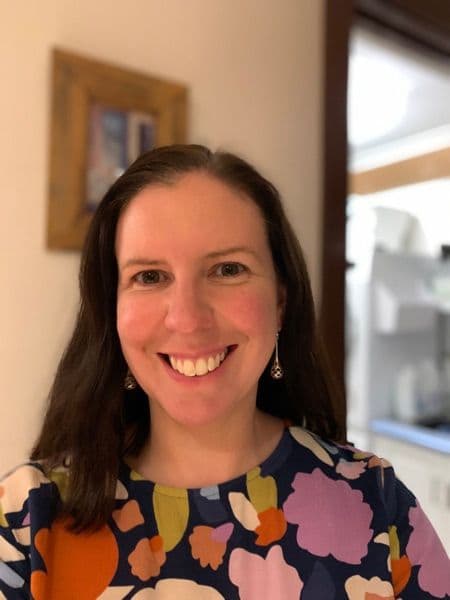
Leah Duffy is the mother of Gemma who has the rare genetic disorder SCN1A (Dravet syndrome).
Watch the talk
5 minutes with… Leah Duffy
In this deeply moving talk, Leah Duffy shares her family’s journey through the challenges of Dravet syndrome—one of the developmental and epileptic encephalopathies (DEEs). Leah recounts the terrifying onset of seizures in her daughter Gemma at 10 months old, their struggle through hospitalizations, medication side effects, and constant fear of SUDEP, as well as the incredible turnaround after accessing a new medication.
Through heartfelt storytelling, Leah reminds us of the joy found in small milestones and the importance of expert care, early diagnosis, and community support. Her reflections speak not only to families affected by Dravet but to anyone navigating rare, complex childhood conditions.
Topics include:
- Life before and after diagnosis
- Living with treatment-resistant epilepsy
- The impact of new medications
- Developmental and behavioral challenges
- The critical role of coordinated clinical care
- The power of patient advocacy and community
Watch to hear how one family found hope amid hardship—and why uniting DEE families is key to building a better future for all.
Read the transcript
Hi everyone. So good to see such a wonderful turnout and so many friendly faces that I know and I meeting you for the first time in person. It’s just great to see you all here. So my name is Leah. I’m here today to talk about our family’s experience with Dravet Syndrome. Our family consists of me, my husband Andrew up here, um, our two beautiful little girls, Zoe and Gemma.
Zoe is seven and Gemma is four and lives with vet syndrome. Gemma was born in June, 2020. Bit of a busy time in Melbourne, lots of lockdowns. Um, she was a perfect, healthy, happy baby girl. Just an absolute delight, who brought joy to everyone around her. Fast forward to April, 2021, and Gemma had her first seizure at the age of 10 months old.
This was the beginning of a total nightmare for our family. We went from Gemma being perfectly well to having a one-off seizure, to having more seizures, to having epilepsy, to them being diagnosed with DA syndrome in less than three months, I felt as though my head was spinning and I was in a constant state of terror and dread.
The next 18 months were basically what I would describe as health for our family. Gemma seizures increased massively in frequency and duration. She developed new seizure types and started to have up to a hundred seizures a day, many of which would cause her, cause her to lose all tone and drop to the ground, causing frequent injuries.
Anything would trigger her bright lights, her getting excited and happy, a hot room, a cold room, um, her moving too fast, something startling her. As well as these daily seizures, she would have a prolonged seizure and go into status about probably once every month. We got to know the local paramedics and became frequent flyers of the emergency and pediatric wards.
Gemma was intubated and transferred to intensive care three times. We tried multiple medications and not only were they not controlling the seizures, but they were also causing significant side effects, such as anorexia, insomnia, damage to her liver, and just general misery. She, she used all her medications regularly, so she needed to have a nasogastric tube inserted so that we could get meds into her.
This was the worst period of our lives. I felt as though,
sorry. I felt as though I was failing her constantly and I was devastated that this was a life my little girl had. So I’m generally a really positive person, but this stage of my life just nearly broke me. Things massively improved for us when we were given compassionate access to a new medication.
About 16 months after Gemma’s diagnosis, within a couple of months when we got to the therapeutic dose, Gemma’s seizures just stopped. It’s now been almost two and a half years, and in that time, she’s had less than 10 seizures total. I can’t begin to describe how much better life is for all of us.
Looking at Gemma today, she’s a happy social and playful little girl watching Gemma play with her sister, go riding her bike, swimming, go to kinder. These are not big things to most families, but to us they’re so huge. As a family, we did not take the small simple things for granted. Being grateful for these small things is what helps us get through all the tough times.
For us. Having gem seizures under better control has made an incredible difference to all of our quality of life. However, as Andreas and Ingrid have described a lot already this morning, sorry about all the Dravet talk, everyone, um, Dravet syndrome, HA syndrome has so many additional challenges. So as well as epilepsy, she has developmental delays, intellectual disability, significant language impairment, gross and fine motor difficulties, sleep disturbances and behavior challenges.
And of course, the biggest thing for us, again, as Ingrid has said, that constant risk of SUDEP and early mortality. The fear of seizures is always at the back of our mind, despite her being relatively under control. I feel like as parents we’re always stuck in that fight or flight mode with dve, as with so many of our other Des As you guys know, you know that they’ll never really be seizure free.
So we are always in high alert. I know that for many of you, including many of our vet family here in Australia, you’re still living in that nightmare that we were in a few years ago. All I can say is that there is always hope. New research, new medication, new trials. I’m so hopeful for the future for our DE kids.
I feel like for us, we are so lucky compared to many families. We are local in Melbourne, so we live near the Austin Hospital, meaning that we were fortunate enough to have Ingrid from a very early time. She was our first and only ever pediatric neurologist. Ingrid, um, sorry. Gemma was diagnosed so quickly, meaning that from the start she was on the right medications to treat Dravet syndrome.
We had so much support from Ingrid, from briley, the medical and research teams at the Austin, Jenny, and the amazing nurses on two West. It would not have got through without the care we receive from all of these people as well as our family and friends. My hope is that in the future, it won’t come down to luck and that every child with a de across Australia is able to have the same access to appropriately skilled and knowledgeable clinicians, quick diagnosis and ready access to the best medications and treatments for their conditions.
I wanna finish by hang tribute to some of our epilepsy families, um, our wonderful Getta team. I participated in the organizing of the conference this year because I was so inspired by Danielle and Danny, by Danny, uh, sorry, David and Chris and Andrew and Sarah, and what they have achieved not only with gta, but also in their own individual genes.
Syn gap, SDN two A and KCM Q2. We and I say we ’cause Epilep epilepsy affects the entire family. We are a group of rare diseases. Individually. We are small, but there is so much power in joining together as a group of Dees. There is so much advocacy to be done. Epilepsy, and more specifically, the Dees remains underfunded and misunderstood.
There is such a lack of awareness of its trim paths. I remember that Gemma, when Gemma was first diagnosed, I said to a friend, she’s got epilepsy, she’s gonna need medication, but that’s okay. Then she’s gonna be fine. I feel like an idiot now. So the unique nature of Dees requires specialized knowledge and we need doctors, nurses, and allied health staff that understand this, who can in turn help improve their health, education, and care systems.
I really hope that all of you come away from today as I have other years. Feeling full of hope that there’ll be a brighter future for our kids and that we can work together to make that happen.