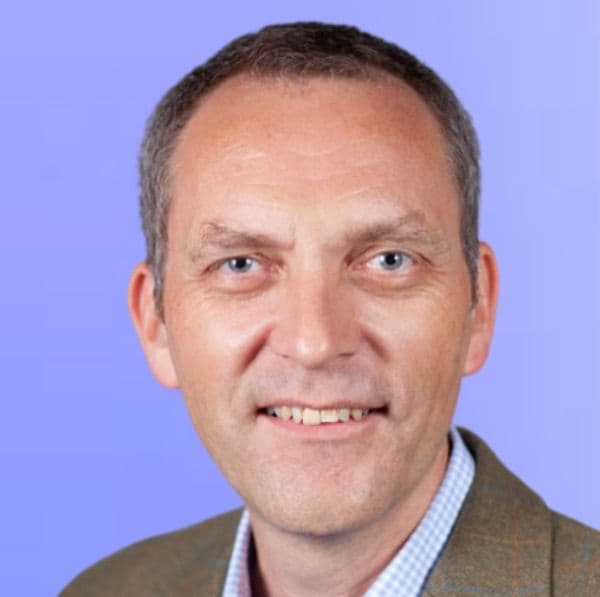
Professor Andreas Brunklaus
Professor Andreas Brunklaus is a Consultant Paediatric Neurologist and Honorary Professor at the School of Health and Wellbeing, University of Glasgow.
Watch the talk
An update on new treatments and clinical trials for genetic therapies
Prof Andreas Brunklaus
In this powerful talk, Dr. Andreas Brunklaus explores the cutting edge of treatment for rare genetic epilepsies, with a focus on Dravet syndrome and SCN1A-related disorders. He outlines the rapid evolution from gene discovery to disease-modifying therapies, including antisense oligonucleotides (ASOs) and gene regulation techniques.
Learn how international collaborations are driving early diagnosis, predictive tools, and natural history studies essential for the next generation of precision medicine. Dr. Brunklaus also shares compelling before-and-after videos of treatment effects and discusses the future of clinical trials—including the challenges of sham-controlled studies and ethical trial design.
Highlights include:
- The SCN1A spectrum: from mild to severe epilepsy
- Predictive algorithms to guide early intervention
- Updates on ASO trials and gene therapy strategies
- The role of natural history data in advancing care
- Real-world functional improvements beyond seizure control
Whether you’re a clinician, researcher, or family advocate, this is a must-watch for understanding the evolving landscape of genetic epilepsy treatment.
Read the transcript
Thank you. Thank you. Thank you. Very good morning. And thank you for this very kind introduction and for this really brilliant opportunity. And just enough being invited here just to see. Yes,
I think perfect. Yes. So it’s been really a real pleasure to be here and and I think I’ve been treated to some fantastic Australian hospitality over the last week, which has really been outstanding and it’s such a pleasure to be here with a group of families that of course I see in my day-to-day clinics every day.
But you all coming together and to build this network across this continent is fantastic. Yeah, I think it’s a real, it’s a real empowerment to actually meet each other and to drive things forward. So what I would like to do today is really give you some of the glimpses of new treatments that are emerging now and that really follow on from these [00:01:00] early developments of discovering the whole, the human genome and how things actually are moving on.
And we can actually now see how things are moving on, which is really quite exciting. So what you can see here is the university of Glasgow and this is our new children’s hospital in in Glasgow. So I was very pleased to see here that your winter is like our summer. So this is very nice to be here and catch some sun.
So just to give you an overview of, so I’m gonna talk a little bit about the advances in genetic epilepsies, some prediction tools, which I think quite important, particularly if you think about early treatments. And there’s lots of developments that still need to happen in this area. Then some new therapies.
I think this is very exciting to talk about some of the new therapies and then also about how do we lay the groundwork for this in terms of natural history studies and how important that is. And I would really like to go back to some really important work that’s been done and concepts that have been developed here in Melbourne.
So you have, if you think [00:02:00] about 40 years ago ha really defined all the epilepsies. You had three quarters of that where basically we’re classified as idiopathic. And if we, in medical terms, if you mean idiopathic, we don’t really know what the cause is. And, but of course, now fast forward, this is worked by Sam Kovich and v Thomas was a fellow here who was now back in the uk.
But actually that this huge part of this the three quarters of the epilepsy actually have some form of genetic origin. And this might be either a single gene mutation or it might be a number of different genetic changes. But clearly genetics is the way forward to explain the epilepsies and what we’ve seen over the years now.
So you can see over the decades, these are all the different single genes that have been discovered to cause a form of epilepsy. And you can see how this exponential rise in different disorders. Now we feature a thousand different genes that are all responsible for causing [00:03:00] different forms of epilepsy.
And I think throughout this talk as well, you will see there’s lots of, although I might talk about one or two different diseases, but actually all these concepts apply to all the different monogenic epilepsies and are all very relevant for all of you here. And this is a very nice overview that Ingrid put together with colleagues really defining, looking at different syndromes and epilepsy presentations and how they might be explained.
And again, you can see that here, whatever you’ve got the little DNA here, you can see lots of genetic causes for lots of d for these different epilepsy presentations. And here on the right you can see how this actually, once you figure out what the genetic changes you get to the cause of what actually might cause this epilepsy and what is the mechanism.
And once you understand the mechanism, you can think, then think about how can we actually treat that or how can we make a difference? And this is just illustrated here, all the different mechanisms that are involved in this area. And what we’ve [00:04:00] seen over time is this just an example of how things have been moving on and how precision medicine for genetic epilepsies has has evolved.
With time and by precision medicine, we really want to get to the heart of what is the original cause and how can we reverse it and how can we advance science? And this goes from at the top here, from gene discovery and then that facilitates for you to make a diagnosis. Then you want to learn about this disease and be able to describe it much better.
And then you really want to go into drug discovery and how can you actually treat it? And how then to go into trials where you actually develop new treatments and then apply that and want to make a difference. And I think here the key, so some of the, some of the key accomplishments here have really been driven by the Melbourne team.
So you have here, for example, all the gene discovery. It’s been fantastic how this team here has and world with worldwide collaboration has driven this [00:05:00] forward. But there’s still key challenges of, we don’t really still understand the complexity of genotype phenotype association. Somebody mentioned earlier that they had a gain of function s SCM one a mutation, which we only recently described.
Which had existed for a long time. Actually now we are only starting to learn about this. There’s so many new stories that we still don’t understand. Then of course we’ve had now the accessibility of testing has advanced significantly. So if you think about the human genome project and how expensive that was, but now we can actually sequence the genome for a few hundred dollars.
So it’s much, much cheaper. But we have lots of parts of the world where we have no testing whatsoever. We just did a big survey across the, in know worldwide, about six continents. And we can see that’s actually large parts of the world have no access at all to genetic testing. Yeah. And that really we need to change that.
The natural history studies we need to learn much more about. So we’ve been very good at describing the genetics, but we haven’t been [00:06:00] really diligent and good at describing the clinical features. And I think an exception is, Ingrid’s work for many diseases really to establish a really good and very rigorous clinical description, which makes you learn so much more about the disease.
Yeah. And this is something that we really need to drive forward now. And then of course drug discovery in clinical trials. Now, one of the things that you would’ve noticed here, all of you’re sitting here there’s, as a group you are many, but as single disorders, there’s only few of you. So how would you run a clinical trial where there’s only very few?
So we have to think about how can we do different trials like NF one trials or trials that actually apply to rare disease. This is still something that we need to work on. And I think a really impressive story is that of s sc n eight A related tos and what happened over time. So this is a sodium channelopathy, meaning that those called epilepsy presenting early on in life.
But this was only discovered in [00:07:00] 1995. The association with epilepsy was only made in 2012. And since then, we’ve had a family organization being created funding being generated, and within less than 10 years. From discovery that this called is epilepsy going onto a SO therapies for this disease?
Yeah, it’s less than 10 years. You go from discovery that this exists to actually treatment or precision treatment. And that’s really the pace that we’re seeing now, how things are really moving forward really quite quickly. And I think why genetic testing is so form, but so important is ’cause it really does make a difference to how patients are treated.
Yeah. So if you, this is a large study from the US where actually a large laboratory that performs all the genetic testing looking at does it actually make a difference to get a genetic diagnosis? And over 50% of cases, they could say yes because it just meant that a new medication was [00:08:00] started or somebody was referred to a specialist who knows about this disease or medications that might not have been, that might have been contraindicated, could have been stopped.
So knowing really empowers you to start the right treatments to get in touch with the right people. And that’s really positive. And if we think about the different they looked at the different diseases that they discovered that they tested for and whether these have had either positive or negative changes.
For example, the most common gene was S SCN one A and then PRT two. But you can see that overwhelmingly the diagnosis of that mutation led to changes in management that were positive for that patient. Yeah. So you can see that overall genetic testing is a really good thing ’cause it allows you to implement the right treatments for that individual.
And now giving this example of Dravet syndrome that is caused by an S SCN one, a loss of function mutation is Charlotte dve who first described this in 1978. And these are children that [00:09:00] appear to be normal when they’re born, but around five to six months of age. Then present with prolonged febrile onic and journal tonic-clonic seizures, and then have other seizure types devolving from the age of one to four years onwards with myoclonic jokes.
Absence al absence seizures. And what then becomes apparent that the cognitive development is not as expected. So for probably from the age of one, one and a half onwards, and we have this emergence of a developmental and epileptic encephalopathy, that’s a really important concept that it is the underlying genetic defect as well as the epilepsy leading to the emergent DEE.
And this is caused by mutations in the s scm one a gene. And so this is, and again, so these complex, these concepts really apply to many of the monogenic epilepsies. So this is encodes for a sodium channel. And that sodium channel [00:10:00] sits in the cell membrane of a nerve cell. So here you’ve got a nerve cell, but the body of the nerve cell and then how it connects to other nerve cells.
And what’s really important is that you need this channel for sodium ions to travel through. Because if they can’t do that, the information can’t really pass from one nerve cell to the next. But what you saw on the earlier slide of, so you have all the different mechanisms that we have, they’re all impact on how our nerve cells connect with each other.
And whatever defect you have in any of the nerve cells, it will lead to difficulties how our nerve cells interact. And simplistically, if you think about voltage grade, the sodium ion channel, so you have got this channel that sits in the membrane of the nerve cell, and you’ve got the pore, and then you’ve got what’s called an inactivation gate.
And you’ve all your sodium outside. And if arrested potential, meaning when there isn’t much happening, that’s the POS closed, but then in response to a nerve impulse, so then suddenly your pore opens and all the ions travel [00:11:00] through. Yeah. And that’s really important ’cause that then initiates a cascade of other information that passes from one nurse to the next, and how this is how nurse interact with each other and what you need.
And at the end is that of course, you need to stop this as well. So you need to open it and then you be able to close it. Yeah. And this machinery really has to work well together. And what we find in Jve syndrome is actually that often you have a mutation that destroys or impacts on this poor region. So often you then end up with 50% of all your sodium channels not being produced.
Yeah. So you have what’s called a hapless sufficiency, where basically 50% of your sodium channels don’t really work. You only have got 50% that are working. And that means that you have a presentation with epilepsy, with lots of different aspects. Yeah. And and I think we really have to think beyond the epilepsy.
And I think that becomes then very clear here, so that Dravet syndrome is an iron channel disease. Yeah. So this is an illustration of the brain. [00:12:00] And you have these iron channels are expressed throughout the entire brain. Yeah. And what we can see, for example, is they’re expressed in this particular part is called the hippocampus and then animal DVE models.
What we could see is if you have this mutation, you end up with lots of seizures. This is in the EET, which shows you lots of cardiac activity. So it causes EP seizures. But what we also know what’s also expressed in the back of the brain, what’s called the cerebellum, that’s really important for movement and it’s for balance.
So what we know that individuals with Dravet syndrome actually are what we call ataxic unsteady on their feet. So we have a presentation not just of epilepsy, but also of unsteadiness. And what’s really important that this is also expressed in the in the front part of the brain. And that’s really important for learning, for planning, for thinking, and also for activity.
And it’s also in terms of how we interact with each other. Yeah, so you can see that this [00:13:00] ion channel disease causes lots of different what we call presentation or comorbidities in one individual. And you will recognize that in your own kids you will recognize it’s not just the epilepsy. There’s lot of different aspects that actually you your child or your might struggle with.
And that is because the underlying genetic defect and the change in the nerve cells will actually generate that particular presentation. And I think I like this review, which looks beyond the epilepsy and the overlapping of neurological and psychiatric phenotypes. So you basically, here’s an illustration of different presentations such as autism spectrum disorder, A DHD, seizures, schizophrenia, depression, anxiety.
And then you have different genes that are involved in these different aspects. For example, blue are all the genes associated with epilepsy in green, those with dystonia, which is a movement disorder, and purple those with [00:14:00] autism spectrum disorder. So you can see that one particular change might actually present with lots of different features.
And that’s really important I think. So I’ve added actually these three here ’cause there weren’t there before. So that course you’ve got lots of different presentation and that’s, so our knowledge about all the different diseases really important, what I mentioned earlier, to really understand the genotype phenotype association means to learn more about the disorder and how it presents.
And that’s really important. So getting back to the example of Dravet syndrome here, this was a large survey amongst families internationally, over 500 families really reporting on quality of life and what we call comorbidities associated with Dravet syndrome. And what you can see here is that we’ve got really high rates of motor and poor motor impairment speech impairment, unable to talk learning difficulties, autism, A DHD type features.
And this is where you need to get back to families for families to [00:15:00] actually report. These are all the different things that we struggle with and that that really important to to determine. We did in the UK and in Glasgow, we did what we call a longitudinal study. So where we started to look in 2010, 9, 8, 9, 10 at the cohort across the United Kingdom of individuals with Dravet syndrome.
And then 10 years later we looked at the same individuals 10 years later and what their development and how they got on. And this is here looking at the cognitive abilities 10 years ago and then 10 years later. So what you can see here, whether somebody had an average cognitive abilities or mild, moderate, severe, profound learning disability.
And what happened then over 10 years, and this is slightly misleading because what we know on Dravet syndrome is that you don’t have what we call a regression, that you lose skills, but you don’t acquire skills at the same pace as your, children your brothers and sisters who actually develop normally.
So you [00:16:00] see that if you, over time, over 10 years from, if you’re six years old and then 10 years, eight or 16, you would expect a huge rise in knowledge and in, in inability. And actually in these kids, that doesn’t happen. So this gap between the DVE children and normal controls really becomes ever greater.
And of course, we then also look at other comorbidities and predictors of what might impact on health related and non quality of life. So we look at, for example, autistic features. So at the beginning we had about 15% autistic features after 10 years, 80% of autistic features. Yeah, so behavioral difficulties huge, right?
And also motor disorder. So over time, we can see, and these are really important aspects of how kids present. And it’s important not just to focus on the epilepsy, but also to focus on all what we call the comorbidities. And this is a slide that gives you this an overview over time. Actually, this is from from birth, three months adulthood [00:17:00] in Dravet syndrome and all the different things that that then occur.
So you’ve got febrile seizures, status epileptic disease are really long seizures lasting 30 minutes or longer than mylon seizures. But here we also have ataxia, we have got crouch gauge, we’ve got sudden unexpected death an epilepsy. So you can see over time, this is a really busy disorder with lots of different comorbidities over time.
And I think this is part, you’ve also, in all the different penetration and monogenic epilepsies and diseases that you’re confronted with, you will see something similar. And what is interesting about DVE syndrome is, and s SCM one a related disorder, is that we have different presentations depending on the severity of the mutation in the s SCM one A gene.
And that ranges from the most severe presentation of DVE syndrome to actually very mild presentation of febrile seizures and febrile seizures plus genetic epilepsy was febrile seizures plus this was [00:18:00] Ingrid’s original PhD thesis and understand a huge amount of work on this. Distinguishing the two or the different presentations of s SCM one A mutations and going from milder missense mutations to truncating loss of function.
If you have a truncating, if you think about can you build a protein, if you can’t build it at all, then we give you what we call a truncating. So it’s, that’s not operational. If you have a missense mutation means that one amino acid is exchanged for another one, and you might still have a functional protein, but it not function, it might not function as well as it should.
Yeah. And you can see this gradient, but I think what’s really important is here, and what’s lots of questions for physicians. If you have a child presenting at six months with the first prolonged febrile seizure and you do the testing for the SEO one agent and you know it’s positive, how do you know that your child will either develop Dravet syndrome or febrile seizures?
Yeah, so it’s really been [00:19:00] important because if you have D syndrome, that is means that you have intellectual disability and lots of comorbidities. But if you have only a fe seizures, that’s a much milder representation and it’s really important. So that’s, so many people in the past many groups have tried to explain this and to look for what we call biomarkers or indicators that can tell you early on where the journey might be going.
And that’s really important. So what we found is this is a Japanese group and they looked at presentations of children, whether they had an age seizure onset. And what they found is that in the D group, the age of onset, an early age of onset was really important in a good, an important marker for for DVE syndrome versus other epilepsies.
There’s other groups from Italy and from the Netherlands who looked at this as well, and they also came up with this idea that if you present very early this gives you a higher chance. But what we found is that the Ians weren so confident really just rely on H one alone. And this is where international collaboration is really [00:20:00] important.
And you need to look at many patients to actually find out and develop tools that are powerful enough to actually give you an impression of how well you can do this. So we did this with an with a huge international collaboration. We included over a thousand patients with s scm one a related epilepsies across the world.
And Ingrid was part of that friend and then colleagues across the world really. And what we did is we looked at the age of cedar onset, that was really important, but we also looked at part of the genetics and whether the genetics and part of the genetics can actually give us an additional information to call a variant and whether this might be a d variant or a milder variant.
And when you do that, so now with ai, with machine learning tools, you can actually develop models where we basically have a training cohort of said 750 individuals who are either guest plus or Dravet. And then we predicted on on [00:21:00] those informations whether they would develop either DVE syndrome or plus.
But if, when you do that, you always then need to prove that this is really able to do what you intend to do. So you need to test it. On samples of patients where you don’t know the diagnosis. So we did that. So we, Ingrid very kindly, gave her core, gave us information about her cohort of about 200 patients.
And we did it again on the Belgian code where we did not know whether the individuals actually had drug syndrome or gas plus. And we predicted it based on our algorithm to show whether this is actually helpful or not helpful. And what, but you can see is that when we looked at, for example, the HC onset, so here the closer you here to the left, the earlier you present and theravive patients are on purple.
So you can see that the D patients present really quite early compared to the milder G plus who present later. But you’ve got quite a lot of overlap. And then the genetics, again, if you’ve got a high genetic score, the higher, the more severe. And you can see that the DVE patients were all clustered on the right hand side and the [00:22:00] milder gas plus on the left.
But still there was a lot of overlap. But putting the two together was really helpful. And we then tested it on two cohorts. So the top is an illustration of Ingrid’s cohort and every vertical line is one patient. And it goes from here to here. If you have, if you’re right on the right, your chances of driving syndrome are really high.
If it to the left, your chances of genetic epilepsy of plus are very high. And then this is the Belgian cohort where we did exactly the same thing and then we unblinded ’cause we didn’t know what the phenotype was. And what we found is actually that our model predicted all the D patients to be on the right and the guest plus patients on the left.
Yeah. And this is now available online. It’s freely available. Clinicians can look at this. You type in your your mutation. You type in the age of onset and that gives you an estimation. What is your percentage chance of developing javet syndrome versus developing genetic epilepsy, fibrosis plus.
And that’s really [00:23:00] important because you can actually do this at the time of diagnosis when you actually receive your genetic result. ’cause when the seizure occurred and you have a genetic result much earlier. And this now means that clinicians based on the clinical acumen, but also with the help of this, can then tailor their treatment towards more targeted what they think the problem might be.
I think what’s really important is that of course this is model is designed to be used by trained professionals and neurologists to aid the diagnosis of SMA related and epilepsies. So it’s intended to complement clinical judgment, but not to replace it. Yeah. So we had then, I had then, so what’s really important is, so this needs to be looked at by an expert in the disease who actually knows the presentation at can, it can interpret this properly.
Yeah. And this will be then your chart, neurologist, geneticist. And this model applies to loss of function SM one a presentations. Yeah. But I think it just shows you that [00:24:00] in the future, when we think about if we need an early diagnosis and we want to treat earlier, and that applies to any disease where you think the earlier you treat the the better the outcomes might be.
Therefore, developing tools for other diseases as well where you can actually make and make an early diagnosis is really important. Now, just focusing on where, with Dravet, particularly where we have evidence-based treatments for Dravet syndrome, and you will be familiar with sterol of those who have had an SM a JVE syndrome.
That’s one of the first drugs to be approved. Then we have cannabidiol and fenfluramine. And what’s important to understand here is that there’s a whole process of how drugs are actually approved and how studies need to take place to actually establish whether a drug is safe and efficacious.
So this is, this starts with what we call preclinical work. So this is all mouse model work. You will see this if you’re interested in what’s happening in your disease field and your particular and [00:25:00] it mutation field. You will see that there’s lots of preclinical mouse model work. And then it goes into the human phase.
So you’ve got a phase one, which is first in human. It means that then it crosses the barrier between animals to them used in humans. These are very small sample sizes, and that’s really to determine the dose, but also safety. Yeah, safety is really important. And then it goes into different phases where again, further analysis on how safe this is.
More efficacy. And then it goes into phase three, which is then, which is a placebo controlled trial where you basically try the medication and then also have a different arm that’s a sham arm or a placebo arm where you, so that you can have a larger patient numbers to establish and you have to go, this is a very rigorous process and you have to go through all these steps because what you want is a drug that’s safe to use and efficacious to use, and it has to be tested properly.
You can’t just jump the queue and go straight to something when it’s not rigorously tested. And that’s really important. [00:26:00] So how this works and how this presents in the driving field is that at the moment. So we’ve got different levels of development. So here you’ve got the different circles, and on the outer circle is preclinical than early clinical, late clinical.
And this is marketed. Yeah. So what you can see here marketed is fenfluramine, CB, D CBD, and Ster Pentol. So those are the drugs that are actually approved. And I’ve just heard that fenfluramine is just been approved to be to be administered here in Australia as well. But what’s interesting is this lower part here, these are extra disease targeting or disease modifying.
These are the genetic treatment. And let’s say five years ago, none of this actually existed. Yeah. We only had, there’s two drugs now in development in trials. But actually all of these 10 here actually only just emerged over the last five years. And what I anticipate that over the next 10 years, this whole disease development field of genetic therapies for any genetic epilepsy will really gather pace and momentum and there will be more [00:27:00] and more products becoming available.
And I think if you think about how these new disease modifying treatments actually work, so you basically have, you’ve got your DNA, which is basically the recipe book for all your proteins in your body. Yeah. And every single gene and codes for one particular protein. Yeah. This is like a recipe.
And so then the process is that you go from your snippet of your DNA, which is a gene, then you go, this is gonna be transcribed in what’s called a messenger, RNA, and then translated into the protein. So what you want is in the SE one A examples, so you’ve got the s sc, S one A gene, but then actually you want to end up with your iron channel, which is the protein.
Yeah. And that needs to work properly. And you have different ways of where you can actually make a difference and modulate that. So I explained earlier, if you have, for example, the FCM one, A gene, and in Dravet syndrome you’ve got one copy, you’ve got two copies, and one copy is just not functioning.
[00:28:00] So if you go and you’ve got 50%, how can you make up to a hundred percent? Yeah. So the idea is can you actually give a new copy of s SCM one A and just give that extra? The problem is that they this is a very big gene and big protein, so it’s very difficult to transport that into the cell. Yeah. So that’s difficult.
And there’s different ways of how to look at that. Then what you can, at the genetic level, you can actually boost the s SCM one a gene expression with a transcription factor, for example. There’s lots of different clever ways how to circumvent this. And what’s really exciting is that over the last 10 years, we’ve seen such a development of new things and new techniques to overcome all these different hurdles that we have.
Or you can do this further along from the DNA then to the messenger, RNA. And at this level you have got the asos and that will, I will focus on a little bit later. And the target is always to produce more protein and to make up this deficit of 50% that we have. [00:29:00] So now coming to the one of the trials that’s now have been really running over the last few years really.
And that’s an ASO called z that’s an antisense oligonucleotide under the developer for treatment for drug syndrome. And that’s what’s called an RNA based treatment. And it increases the expression. By blocking a part of the mRNA that normally would lead to degradation. So what I explained earlier, so here you’ve got your DNA, and here you’ve got your protein.
Yeah. And what normally happens, you’ve got one 40 copy. The 40 copy doesn’t produce anything, and then you’ve got one, one good copy. And what you want is you want to, this a SO antisense IDE actually makes the good copy being pro being produced more. Yeah. So you basically, you produce more of your healthy copy and therefore you increase your proportion of a protein that you have.
And this is delivered via repeated intrathecal, so by repeated lumbar [00:30:00] puncture. So what you can see here, so this is this is a spinal tap. So this is applied by giving repeated doses every few months of this product into the brain fluid. And that selectively blew boost the tissues, only tissues where this is normally expressed.
And this is early animal workers on on mice. So dve, so this shows the survival of DVE mice going forward. And you can see that DVE mice that are not treated die very quickly, whereas those that were treated with this A SO actually had a really good survival. Yeah. So this is the first step to show that this actually in principle might work.
And then you move on to trial this in in the human. And here. So this was the, these were the first one, phase one, two. So first in human studies on safety and efficacy of ersin. And the eligibility criteria were, these were patients that were between two and 18 years of age that had an established diagnosis and they needed to have an s SCM one a mutation.
So it’s a genetic treatment, so [00:31:00] of course you need to have a jet mutation. So for this to work. So that was the inclusion criteria. And then you had ascending doses. In phase one, two, you want to look at safety and to want to look which dose might be the appropriate. So you start with very low doses and then you titrate up to higher doses.
So this was from 10 to about 70 milligrams was conducted in the US and in the uk. And then after you can see here, you have these three loading doses and then a pause and then a dose every four months. And that then went into the open label extension that all those patients then continued to get the same treatment longer term.
And we looked at safety and then also changes in seizure frequency. And overall there were 81 patients that were included. All of them had, or the majority of them were already on lots of anti-seizure medications. So 50% of them already were on four or more anti-seizure medications. You can see these were really patients who have quite treatment resistant, [00:32:00] despite being on four drugs, still had so many seizures that are qualified to actually be included in.
In this trial, and looking at safety and tolerability first. So we had in the fa in the phase one, two, we had 30% of patient experienced study related treatment emergent evidence events. So the most, what we almost often was that the protein in the brain fluid was based. And this is something that we’ve seen many times in antisense or IDE treatments before.
This is something that’s recognized, but it didn’t present with any clinical signs. Sometimes you worry that if your protein in your CSF and your brain fluid is high, that this might be associated with higher pressure or headaches or, but these patients actually didn’t have any symptoms. We noticed this but there were no clinical symptoms.
However, we had one patient that had what we call an sudden unexpected, serious at adverse events. So there’s, out of the 81 patients, [00:33:00] this is, again, this was first in human and you have to be quite cautious because you don’t know what will actually happen. So we had one patient who actually had a regression that we couldn’t explain by any other ways.
We really examined this patient, we assume it might have been related to the product. And we don’t, at this stage, we don’t know, was this one, is this one out of 81, is this one out of a hundred thousand or is this more common? And this is on this journey of discovering new compounds, new drugs, there is a risk, and only with time will we learn how frequent that is.
And that’s, that is why all these studies are really tightly regulated and need to be reported. And you need to really find out what might be, what are the benefits and what are potential risks here in the open label extension. Then almost all patients carried forward and up to 8% of patients presented with this waste protein levels.
However, they didn’t present clinically. And it wasn’t a reason for anybody to drop out of the, there’s only one patient where the clinician wanted to drop out because I didn’t [00:34:00] feel the patient had any benefit or so much benefit. But most of the patients actually tolerated this quite well. So if you then look at efficacy, so this is then looking at here an illustration.
This is the number of, and the change from baseline and seizure frequency. Yeah. So we counted how many seizures the patients have and what happens over time. Did the seizure count actually reduce? And what we can see here is over time is you’ve got here in different colors, different doses of medication.
And the lowest dose is 30 milligrams in orange, then 45 milligrams in red, and then 70 milligrams in green. And what we can see is, what you can see is that over time, those patients who received a higher dose of 70 milligrams, their seizure frequency really dropped quite significantly. Down to about 80% reduction.
And these are patients who already were on four medications, despite all their medications, had very frequent seizures. And with this new treatment actually at the higher dose of 70 milligrams, actually the seizure frequency [00:35:00] dropped quite significantly. And this is just a figure to show how over time, this is again, the change from baseline in seizure frequency and the higher dose.
And the lower dose. And this is actually over two years. Yeah, over two years, is you can see how this is actually maintained. The reduction in seizure frequency is maintained over time. But we are also very interested to look at, and I explained that in the earlier part of my talk, looking at the comorbidities and the other presentations, looking for example, at cognition.
And here we looked at cognition and behavior. And this was with an adaptive behavior scale the violence scale and what you can say here. So looking at receptive communication, how well communication is understood, expressive, how well somebody can express themselves personal skills coping skills, cross motor skills.
And if you have a baseline, any shift to the right is an improvement. Any shift to the left is is a deterioration. And what you could see from a earlier slide is andin. And what you expect is that over [00:36:00] time, actually individuals don’t get better. They get, and individuals plateau and didn’t, don’t really improve.
And what you can see here is that after the first, after at nine months, you see this improvement here. These are the improvements seen after 12 months and after 24 months. So we can see that amongst all domains. We can see improvements over time in all these different presentations. And I would like, so this is an illustration of a patient that I treated as a 12-year-old girl.
Who here, I’ll show you first in terms of how she presented with her seizure presentation. So this is her monthly seizure count and before she was enrolled, she had an average of what, five generalized tonic-clonic seizures per month. And then she was received her first two treatments. And what is here is that she received 70 milligrams.
And how this works is that once you get the a it takes about six to eight weeks for your proteins to actually restore themselves. So you don’t expect a treat an effect immediately, but you expect an [00:37:00] effect to see after four to six six weeks. What you can see here is that after the first two doses, then suddenly her seizure count dropped from about five a month to one a month.
And then we had extra dosing pulse a pause in the dozing and then after time, ’cause the product doesn’t stay in forever, so it then washes out eventually. And you can see how then the seizure counts rise again. And then she was treated again and along in the open extension. And then you can see how that she settled on about two seizures a month.
I’m what I show you now is how. I filmed there how, when she was kicking a ball before she was treated, and you can see here, so what you find is in Dravet syndrome, you have lots of what we call unsteadiness and ataxia. So she’s trying to kick the ball. And what you can see is that she can do that, but it’s quite unorthodox how she do it how she does it.
And you can see that she really has difficulties with coordinating that. And this is now her eight months after treatment. Yeah. [00:38:00] So you can see that basically how she manages her task much better. Yeah. So she her posture is much better. She, we didn’t send her to Celtic football school, so this is, yeah, so this is just her being able to do that.
She, she’s not huge, but you can see that in terms of her mortar development she’s much, much better. You can see that here. Yeah. So she’s, yeah, she just manages that much better. Then this is now her trying to button her shirt. And what is here, this is in February, 2023 at the time of dosing.
And this is now again eight months later and you can see on the right. And so in terms of, that’s, that’s fairly important. Getting Ben getting ready in the morning before school and how you manage that. What you can see is on the right, her alignment, her fine motor function is is much better than on the left.
Yeah. So she really struggles on the left to align the buttons to try to button that. Yeah. You can see how she is able to to do that with more accuracy where on the left, she’s not actually, she’s right. [00:39:00] She, yeah, she gets a frustrat there. It can’t be good. And here she even manages to do the top button that she can’t actually see.
Yeah.
And then in terms of f motor function, this is her writing in 2022, and that’s her writing in 2023. Yeah. So you can see how the writing, the accuracy is much better. Yeah. So you can see how that is really much improved. And the next task, I’m I’m asking her to do a, what’s called a finger nose task.
And that’s really, so it looks for unsteadiness, but here it’s really to see, so she doesn’t really understand the task and also how her interaction is with me in terms of whether she keeps eye contact. You will see on the left, she can’t really, she’s quite gaze avoidant and touch.[00:40:00]
See, she’s still quite repetitive in how she does good. And this is you later. Wow. So the way she interacts with me, the way she sits up, she keep eye contact.
Yeah. And then the next task I was asking her to to count,
so she hardly looks at me. Yeah.
4, 2, 3, [00:41:00] 4, 4, 6, 8, 10, 4 test.
You can just see that how whole interaction with me is different. And also that the parents described that in terms of how she interacts at dinner, that table is just very different. So it’s, and that just goes beyond just reducing super accounts, is actually in terms of what we have in the benefits and all the other domains.
So this study is now the open label. So that study is close to recruitment, meaning that the patients were enrolled and now the patients continue to read to receive the treatment in the open label [00:42:00] extension. And what this company now is planning is what’s called the first phase three study. So this is gonna be a study that’s called the Empress Study and the duration of that study.
So this will be a study to show the difference between individuals who receive the A SO and those who have a sham procedure. So in a phase three, you need to demonstrate that this treatment is better than a sham group. And to show and how this works is that nobody knows. So neither the clinician nor the patient know who is receiving what, so that you can actually demonstrate that there’s a difference.
And this will go over an entire year. Yeah. So you will have one patient who will be randomized to the sham, who will have for an entire year will receive repeated lumbar punctures but not get any treatment. And the other group. And the reason, the rationale for that is that the indication here is not only to show that this leads to [00:43:00] seizure reduction, but also it has other gains.
And to be able. To show the other games, you have to do that via new psychological assessments. That can’t be done very, so they have to be done over per certain period of time. So you need almost a year to actually show that reliably. And so this is, and there’s now we discussed that many times and there will be ongoing discussions ’cause we are now moving in this field.
And what is the right approach here? What is the right waiting for one year to get to be in a sham to then receive treatment? Can that be shortened or which grounds can it be shortened? These are all important discussions that will take place over coming years to come up with proper with the best model how to do that.
So the this emperor study will will be conducted in in the US and many European countries. Ingrid was very adamant to bring it here and I think it stood discussion system ongoing, but they’re not gonna, it’s it’s really difficult in terms of the of that planning. [00:44:00] So the primary end con points is Es but then looking at improvements in behavior, cognition and other aspects.
And just showing illustrating this is a different approach by the company and coded. And this approach is not via a this is actually turning up subscription and thereby acting directly on the DNA to produce more s SCM one A protein. Yeah. And this is given via a one-off intraventricular injection.
And that will then is used by a viral vector. And the idea is you give this once and that then will upregulate s scm a protein production forever. Yeah. And in the mouse models, so I looked at mice are treated in this way at the survival. So the untreated mice died much earlier. The treated mice had much better survival.
Again, when we look, so Jarvis syndrome presents or individuals are really heat sensitive. At temperature, high temperature will trigger seizure. And then it’s important how resistant [00:45:00] you are actually to higher temperatures and the mice that were treated. So here you can see that the drop mice were starting to seize quite early.
Where there the treated mice were much more resilient towards higher temperatures. So this shows you that in the mouse model, these, this looks really quite promising. And this is the reason why this then went into a clinical trial. And this trial is currently ongoing and patients for this trial are recruited in Australia, in America and in the United Kingdom.
So it’s a phase one, two. So it’s very small numbers of patients being recruited. What we, I think there’s about 10 patients recruited so far. And we know we have heard about safety data, so it seems to be well tolerated, but we haven’t heard any data on efficacy yet. And this. Really, because at the moment it’s in the phase of trying different doses, different dose levels, and to figure out what might be the right doses to use and that are also safe to use.
And this is again, so it’s done by a neurosurgical [00:46:00] procedure. The anti, the a SO is given by be the lumbar punctures, but this is given by an intraventricular. So it’s a new surgical procedure with the injection here. And so we’re waiting to hear the, what this will bring going forward.
So I can see that I’m over time. So what I’ll do is I’ll, this is, I was just giving some other examples. This is a recent review in terms of precision treatments. You can see all the different genes here and there’s lots of different ways of new treatments being developed. And you will know this for your own for your own genes.
You’ll know what’s going on in terms of the developments and of ASLs being produced. I’m going to skip this actually. I think where we have to move to is in terms of the journey ahead really is to look at clinical trial and recruitment feasibility. So we really need to divide, develop trial networks and engage with the community.
That’s really important to develop that. The other aspect is in terms of the clinical picture. So natural history data, this is really something that we need to [00:47:00] develop. So if you imagine you are conducting a trial, you have a new treatment, and if you’re not just counting seizures by looking at all the other comorbidities, how do you know you may actually making a difference?
And if you actually have robust natural history, data collected long periods of time, they can then be used as a comparator to say, actually we know from a natural history that wouldn’t normally happen with a child. If you have an improvement, you can say, actually this now is divert from the natural history and means that this is an improvement.
And clearly what we need is getting trial ready. We need to be able to look for biomarkers. What are certain aspects of the presentation that can give us an indication that a treatment is really effective or not effective. Yeah, so looking at biomarkers beyond the seizure count. And that’s really important and developing that from our ongoing natural history studies.
So just giving a quick presentation. We started in 2018 really thinking about natural history studies and Ingrid came over to the 19 to really think about [00:48:00] how can we develop that in the United Kingdom and what we’ve got together, we had a group of all the chart neurologists from all the different centers to actually to plan this.
And because we have drugs that affect us over reducing seizures, but if you want to look at cognition, other aspects. You really need good natural history data and this has to be done prospectively. And if you do that, if you enroll many patients, it also means that you can raise the standards of care that that you receive.
So this is, we’ve done this now in pediatric and adult centers. And that’s something that I think is really important to highlight. It shouldn’t just be pediatrics ’cause all these monogenic epip are lifelong disorders and it’s really important to collect data, lifelong data to those of then be able to show that benefits can be achieved in old age as well.
So it’s really important. So we’ve have a group of third participating sites that’s cost me many gray hairs to develop this and to ’cause even though the, we’ve got a national health service, which works [00:49:00] brilliantly, but still you’ve got regulations in every single hospital and to setting up a site and to get everybody on board is a lot of diplomacy required.
And so we’ve we, our aim was to recruit about 1240 children and 60 adults and we’re using a VD to also to build and establish adult centers of expertise for driver syndrome in the uk. And we are looking at seizures and neuro cognitive assessments, but also detailed medication data. And what we do is we integrate it into routine clinical care, meaning that almost like in cancer care as well, where basically your clinical visit becomes an automated study visit.
So you integrate it and it makes it much easier to actually collect data. Long term. Everybody gets in the mindset, yes, we need to collect data and we do it automatically. And that’s very powerful once you’ve done it for a period of time. And we can see that’s very effective in, for example, cancer care where everybody gets automatically enrolled in a trial.
And we also do it, we do the six monthly, but also we have very detailed new psychology [00:50:00] assessments. The families and the individuals then undergo an entire day of neurocognitive testing. And that’s really challenging because these tests can be, often you need to, to plan for breaks might be just too much.
The concentration span is not there. To actually do that is really challenging and difficult. And we’ve got a nice team across the UK who just do exactly that. What we hope is that by doing this, we can also give something back to the clinicians. ’cause the clinicians that are doing this. So once they start collecting data prospectively in a standardized way, we can then at the next visits, we can actually give them the data back and they can, over time, they will then be able to see, oh, these are the seizure counts over the last six visits.
You can see, ah, this is what my generalist tonic-clonic seizures or my focal seizures. Then we can look at how many emergency admissions they had, the patient had, how many ambulance calls, how many deaths in hospital, and all the medication doses. And we can actually give that back to the clinicians.
’cause what we often do is once, once I see a [00:51:00] patient has to go through back my old letters to see, oh, what actually I did I do last year or that, and actually having everything presented to you prospectively makes it much easier to actually make a plan, which medications might work. And another benefit I think, is that you have, we doing this across the entire uk, meaning that regardless of where you live, everybody has the same access and everybody gets asked the same questions.
And that’s really important because of course if you see Ingrid in Melbourne, then you get a really high level, very comprehensive assessment. But imagine you have the same assessment everywhere because everybody signed up to this. And actually it doesn’t matter where you are because everybody gets the same assessment.
And that clearly will raise the standard of care, the discussions that you have, for example, discussions about sude, which is a really important discussion in epilepsy. And that has to be all tailored. So this is of course all that is a team effort. So this is our study team of all the chart neurologists is, last November we had our first meeting, national meeting with our chart neurologists.
We have our new [00:52:00] psychologist our database people saw a huge group of people coming together to actually work on this, to drive this forward. So I would like to conclude that clearly the genetic causes of Dervis syndrome that offers the opportunity for precision medicine, but that applies for any monogenic epilepsy.
I think that this, that the early reports from disease modifying therapies and driver syndrome, what I showed you, I think that’s quite promising and encouraging. One question is of course the timing of intervention that might be important. We don’t know yet whether early treatment might be might be relevant and, but of course precision medicine remains very expensive and time consuming.
And there’s to setting up these trials infrastructure will be expensive. But if you think back the human genome products, how expensive it was to sequence that millions and millions of pounds and now you do it for a few hundred dollars. So I would think that in, 10, 30 years time developing an a SO and giving it will be much cheaper than it’s now.
Yeah. So this is just and so this is, and finally just I’d [00:53:00] like to thank all our patients and all the national international collaborators will be part of this work. Thank you.