Professor Ingrid Scheffer
- 10:25am – 11:10amInternational collaboration is key
- 2:55pm – 3:25pmGetting a new medication to patients: Not a piece of cake!
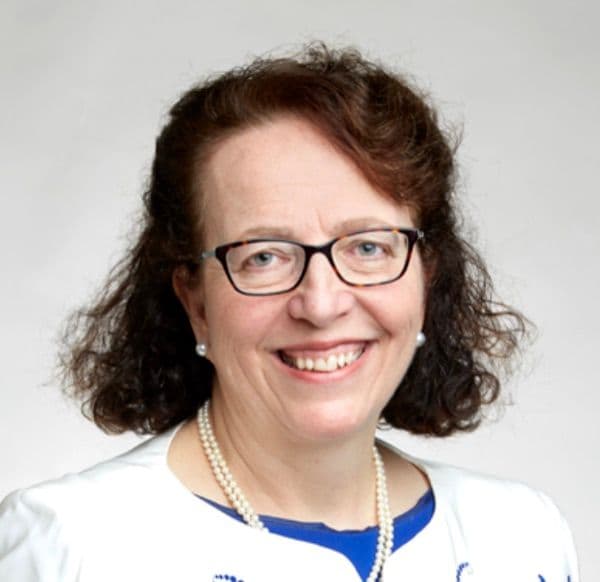
Professor Ingrid Scheffer is Chair of Paediatric Neurology at The University of Melbourne and Senior Principal Research Fellow at the Florey Institute of Neuroscience and Mental Health.
Watch the talk
International collaboration is key
Prof Ingrid Scheffer
Prof. Ingrid Scheffer reflects on her recent sabbatical, sharing insights from her global collaborations and groundbreaking research in developmental and epileptic encephalopathies (DEEs). From the power of parent-led advocacy to the promise of precision medicine, Prof. Scheffer discusses advances in gene discovery, natural history studies, and new therapeutic strategies. Learn how international partnerships and clinician-scientist mentorships are shaping the future of care for children with rare genetic epilepsies.
Topics include:
- The importance of DEE diagnosis and classification
- Natural history studies and health economics
- Gene-based treatments and international trials
- Launch of the Australian DEE research network and patient registry
- Behavioural interventions for families
Explore the global impact of Australian-led innovation in epilepsy care and research.
Read the transcript
Prof Ingrid Scheffer: Thank you for that lovely introduction. It’s great joy to be here. And I’m immensely proud of GETA and I’m saying that to the rest of the world because these are parents that change the world and we’ve had numerous discussions about this, that you are the ones that can get politicians to get us de nurses around the country.
You are the ones that can make the world change and we are there just to help you. Congratulations. I think this is the biggest getter to my eye and quite a lot of people online as well, so I’m very excited about that. Now, Leah, who set up this program with the team, I’ve lost you over there very kindly.
I could said, I could talk about my sabbatical and my secretary rewrote the title to say this because I traveled rather a lot. I wanna just have one talk about the disclosures slide. I did that yesterday at the [00:01:00] sap. The small synap meeting we had, and I think it’s really important, people look at these and go, oh, she does all this work with all this pharma.
That’s why they’re bringing drug trials to us. And we have more of our drug trials team here today than we’ve usually had. And I’m excited about that because that is ’cause they’re getting into the de space, the boutique trial space that Pierra will talk about later, n of ones. And this is where we are really gonna get treatments for these very rare genetic DEEs.
This disclosure slide looks like how do you do it? I don’t really do it. They do it. But I really try to bring trials to us because it makes such a difference and it puts Australia on the map and I think that’s really important now. This is my sabbatical. Most people go for sabbatical for six months to one place or three months to two.
But just to emphasize this was not a holiday, and I’ll tell you a [00:02:00] bit more as we go along. It was a dream of mine to have a sabbatical and I’d never had one and I could only do it because of my colleagues. Many of you know that Sam Vic has been my partner in genetic epilepsy, CRI crime since my PhD about a hundred years ago.
And his role has now been taken by the wonderful Pierro pka and adult epileptologist who’s interested in genetics. His PhD was in genetics and we’ve gotta get him into the DE space. So it’s great that he’s sitting just over there. Many of you will know my wonderful ea Natasha who helps the world to go around, and I’m immensely proud of Riley who’s here, who is the first D nurse in the world, who’d be pleased to know that other people are copying this model already.
There’s one in Germany and lots of people say we’ve got epilepsy nurses. They’re not the same as a de nurse who is someone who specializes in this area. Now, I could only have a break because a break not from work, just by the way. [00:03:00] Because Dr. Michelle Dang, and Dr. Annie Chu, who’s here managed my Austin work and Dr.
Emma McDonald laws, who lots of you will know from RCH, she managed my rooms. And I’m immensely grateful to all of these people for letting me have that space. But it’s bigger. This is a lot more people to thank our, I missed our first time. I had missed our annual research retreat in 30 years. I wanted to thank the team to allow me to do this.
And you’ll see lots and lots of different team members named here. So what did I do while I was not on the holiday? I completed this big review of DEEs with colleagues. Samir is the mentor of Andreas. Heather is in the US is a geneticist. Renzo I’ll come to later as an Italian. And Amy is a wonderful young pediatric epileptologist in London.
And so I’m going to define de some of you who have heard me before [00:04:00] will go, oh gosh, this again. But we just saw there are a whole lot of new people in the room. It is a complex concept, and even though we’ve written about it many times, people still don’t get the essence of it. So I do spend time on it, and it basically brings together three concepts, etiology which is, oh, I see.
So my thing’s, not where I, oh yeah. It is etiology, which is the medical term for cause epileptic activity and developmental impact. And that could be developmental, slowing or regression. If we just wanna think about the. This term, break it up into two bits, into epileptic encephalopathy where we just heard from mill with her beautiful story that she told us about the gorgeous Stella that she presented with this seizure type, which are epileptic spasms.
And this is one of the prototypes of an epileptic encephalopathy. You have a baby that develops these little [00:05:00] spasms, very brief. They don’t look too bad to start with, but it’s typically associated with regression or slowing. But more commonly, regression has a very typical EG. And I just wanted to stop here for a moment to talk about this little girl.
She’s an identical twin. And we saw her with her seizures. We did an EEG also on her identical twin. And she was developing epileptic spasms. She had the abnormal EEG, but hadn’t yet had seizures. So clearly genetic identical twins, identical epilepsy. We sent her to gene steps, so I’m gonna talk about that later.
And the architect is here, Catherine Howell. And they didn’t find the dream. Does that mean it’s not genetic? No, it is genetic. We just ain’t got to the bottom of it yet. So to say that and I’ll come back to this, 50% of our patients we don’t have an answer for. So our work in finding the cause is not done and we have to keep [00:06:00] using new genetic technologies and collaborating around the world to get to that.
So that’s the epileptic encephalopathy. Now we’re gonna extend the term to developmental and epileptic encephalopathy. And this is where your cause causes this epileptic activity, which causes developmental slowing. But in addition to that, your cause causes developmental slowing in its own right. And we just had a very clear description of that.
Rec C see why I always get the letters wrong, C-I-Y-F-I-P, or I should know it, but I’m really bad on that one. And the, there was a clear history of developmental slowing. And then on top of that, you’ve got your epileptic spasm syndrome or infantile epileptic spasm syndrome. And that then is associated with slowing.
So that’s where you’re bringing the two components together. And here’s the sodium channel alpha subunit. It could be SNHA, it could be SN two A, [00:07:00] or it could be SCM one A. And just to emphasize what was said about the other issues there are so many different features with the DEEs, and this is the gauge that we described for Dravet syndrome.
And you see it in other of the des, not just Dravet. And there’s one of my 27-year-old patients who’s got a very severe gait abnormality. We call it a crouch with dystonia. So I’m one of the only two epileptologists in the world I know that see children and adults. And I think that’s really important for understanding whole of life issues.
And this is to emphasize there are many systems involved for the patients with DEEs. Many different areas, they can have problems. Development is almost always, behavior is a lot, and you’ll hear about that a bit later. Ga problems, gut problems. That can be constipation, it can be not eating as we heard, sleep and movement disorders, but it can be [00:08:00] further, it can involve your kidneys, your eyes, your you can get a scoliosis, a bend in your spine.
It can involve all sorts of systems. Now, we’ve heard these are really rare diseases, but are they that rare? And our large epidemiological study looked at this very carefully through Wellington and New Zealand, and we found one in 591 children have a DEE. And that’s powerful because we want politicians public health people to fund these the, all the resources we need.
So one in five 90 is not that small, so that’s important to know. And thank you to Andreas for showing this picture, which is at the sta next stage of my syndrome picture that I, I started many years ago. And you can see the different syndromes. You can see the mean age of onset of infant, high epileptic spasm syndromes six months and Dravet.
You can see if they’re generalized or focal. And that relates to their e, EG rather [00:09:00] than what and trying to show their most common etiology. Was it structural, was it genetic or both? And you can see Lennox-Gastaut syndrome, for example, is both, but as we heard from Sarah, the field has moved so rapidly in our review in 20 16 with Amy Mcta and Catherine Howell, we had 60 pa 60 genes for this.
Fast forward to now, and we have more than 900 genes. So it’s a very rapidly evolving space, and that means more than 900 different diseases. And so then Amy Mcay, who is fantastic at figures, develop these figures. And just to highlight four key areas where genes are important. Iron channels such as sodium channels two A one BS cm, one A, et cetera.
A TP one A three, we heard about that KC NT one, you can see lots of the genes. [00:10:00] KC NQ two that, here a second group how cells signal to each other and metabolize how do the cells work. A whole lot of important proteins there. Epigenetic regulation that refers to above the genes, if you will.
The genes that control how the genes express is this gene turned off or turned on. That’s epigenetics. And I don’t have time today, but we just published the first study of that in DES and showed that we solved 2% of unsolved patients. So that 50% left, we knocked off 2%. You may say that’s not much, but if it’s your child it’s really important.
And then the third part, and we had a nice talk about a synap yesterday, is the synapse here where one neuron talks to the next neuron. And there are a whole lot of very important proteins involved in making that those two ends of the neurons talk to each other to fire off. [00:11:00] Thoughts to fire off everything.
Fire off seizures. And then here you can see Synap one that we had a meeting about. So what’s important, one of the biggest important take homes here is that every gene has a phenotypic spectrum. And even if you have a gene that always causes something severe, like BR one, it still has a spectrum, but in a lot of the genes that we know, we are finding they have a self-limited end and Andreas has talked about that a fair bit as well as developmental epileptic encephalopathies.
So overall, now we know of a thousand monogenic genes. What that means is you just need an abnormality of that one gene monogenic and you will have epilepsy or you will have a de, you might have a mild epilepsy. We know a thousand genes that just that mutation or abnormality will cause epilepsy, but the DES account for more than 900 of them.
So we are aware most of the genetics has been found [00:12:00] and as I said, 50% is solved, but we are really interested in the unsolved ones. So don’t feel unloved. Make sure you are in research so we can keep looking for your cause. So just looking at SDM one A, I’m not gonna belabor this because it’s been done beautifully by Andreas, but we have guests plus at the mild end came out of my PhD a long time ago, that syndrome and
DEEs.
But DEEs aren’t just
Prof Ingrid Scheffer: one. They are many. So the poster child, the one we know about is Dravet. And Andreas mentioned that you can have other ones early infantile ones as well. But so if you look at SCM one A, it’s got a host of syndromes, but take a syndrome, take this one. Epilepsy of infancy with migrating focal seizures.
And we did a large international collaborative study of this in 2019. At the time, 33 different genes led to this syndrome and half of them were autosomal dominant. A quarter autosomal recessive and [00:13:00] some were X-linked. So just to summarize the point I’m making Dravet syndrome, more than 90% of patients have s cm one a different syndrome.
We’ve solved 70%, but there are 33 different genes. So it’s very complicated understanding genes and phenotype. Alright, so you wanna say why bother with all of this? The first thing, and I think we heard that beautifully from Mill, is that this ends the diagnostic odyssey. You can move on. It wasn’t that glass of wine you had when you were pregnant, probably was never the glass of wine you had when you were pregnant.
But, mom’s worry about these things. And I like to frame the gene finding as the beginning of the answer. It’s not the whole answer by any means. It’s why you’re all here. It also helps us to understand the associated features. The word we use for that is comorbidities. Understand the prognosis.
What will my child look like in five 20 years? If it’s a new gene, there might be eight people you won’t know, but you’ll have, be able to get an idea. And are they likely to [00:14:00] be is there epilepsy likely to be drug resistant? I that means the drugs won’t work. How does it help? Will it help you to change the treatment today of the drug to the right drug and get rid of the wrong drug?
That happens often with Dravet syndrome. Still patients are put on the wrong drug, carbamazepine, tegratal, and you get them off it and they do better. And also very importantly for young families means they can have accurate genetic counseling about their next pregnancies. So finding the cause, that’s why the cause is important.
It gives you a precision diagnosis, but I think it’s really important to marry up epilepsy syndrome and etiology. They’re both complimentary pieces of information that add to the story, but very excitingly. It gives you precision medicine or at least the opportunity to head in that direction. And that’s what we are hearing about a lot today and later on from Yuri too.
I’ve put in a lot more about natural history studies ’cause [00:15:00] Danielle Williams sitting right here asked me to yesterday. And it does follow on a lot of what Andreas says, but it’s our natural history study. And just to pick up on what the wonderful Sarah said, citizen is not a natural history study.
Just to be really clear. Yeah. That citizen is an American system where you pull in the hospital notes. So with a click of a button, you get a hospital note. But many of you will have seen when you go and see your doctor, any seizures, no stay on same drugs, see you six months. That is not what we are doing.
We are assessing the children, we are looking at their morbidities. We are looking at how families are managing so much more. So just to be really clear, but it will take time and effort for you as well as for us. So we now need to describe the natural history of each genetic DEE. So not just Dravet syndrome, but all the other 936 genes.
And then we [00:16:00] have to look at those different genes and understand the different severities or different whether they gain or functional loss of function. This is critical because we have these fantastic pharmaceutical companies developing new treatments, hopefully game changing treatments as we saw in Andreas’s videos.
But we can only tell if it’s really making a difference if you had that natural history data to compare with. We are doing really interesting health economic studies and developing national standards of care. So I was very pleased to hear Andreas said that this study is going to change that. And I guess we need to think about that in a slightly different way to make it do that.
And Emma Palmer, whom is here already, are you here, Emma? She’s coming from Sydney, although she’s at the back, is the most amazing geneticist and she’s talking to you later. And she’s really good at leading us in this direction. And I think very [00:17:00] importantly, look at psychosocial impacts. So you can say, oh, this is very nice.
They like doing what they do. We care about your children, but why does it matter? And here is to me, the best example of this. This is a precision medicine called an enzyme replacement therapy. So it’s not a gene therapy. These children get this precision medicine into their reservoir, into their brain every two weeks.
And this got published in the New England Journal of Medicine, which I think is the highest rated journal in the medical field. And the red line is what you have to look at. So here you have the natural history of this disease, which is neurodegenerative. So DEEs are bad. This is worse. It kills you within a few years unless you get this treatment.
And you can see here that the new drug, this s lipase alpha, reduces this death rates substantially. The children are still progressing, I think, sadly but that’s why we need the natural [00:18:00] history study. No regulatory authority such as the Food and Drug Administration in the US is going to approve a $3 million drug, for example, unless they have this natural history data.
So that’s why it’s important. And for those who don’t have a gene, we still want you in there because when we find the gene, we’ll have your natural history data. So it’s forward looking. All right. Now you saw a slide a bit like this that Andreas showed. And I have just done this for Dravet, but I found those slides a bit too confusing, Andreas, ’cause they have the seizures with all the morbidities.
So I split it into two pictures. One is just showing the rate of seizure types, different seizure types in Dravet syndrome. I’m not gonna belabor it, but around the ages of onset. But then I wanted to do one about morbidities. And I’m sorry, I know most of you don’t have children with Dravet syndrome, but it is the one where the most works being done, which is why we wanted to, and we’ve both done a [00:19:00] lot of work in that.
But just to say here, you look at Dravet syndrome, 90% at least have intellectual disability. And here we’ve shown that over 40% are severe. 20 30% are moderate and 20% are mild. So that’s the future based on a lot of data sleep problems. We studied that with a pediatric registrar he was a med student at the time, showing that over 70% of patients with Dravet syndrome had sleep problems.
But the type of sleep problem differed depending on what age you were. We looked at autism spectrum disorder. Now that’s just part of your Dravet syndrome, part of your DEE. But 40% of children or adults will qualify for that diagnosis. That may help funding behavioral problems common and a huge problem.
And you’re gonna hear quite a bit more about that a bit later. But I often think that after you get over the get over, you never get over the seizures. That’s the wrong [00:20:00] word. You get used to the seizures. Behavior emerges as the biggest problem in families’ lives. A crouch gate we described, I showed you that adult, and now there’s been a lot of very elegant work on that by many people in the field.
And mortality. Mortality is the parent’s biggest fear. And our biggest fear too, in Dravet syndrome, it’s well established both here and other groups. 17% of children will not make 20 years of age. More than half of them die from sudden unexpected death in epilepsy, which is basically dying. The sleep.
Usually we think it’s seizure related. We don’t know. Some die from brain swelling, which one of my fellows published some years ago after an episode of status. And of course, anybody with intellectual disability has a higher risk of an accidental death. So that’s what a natural history study looks like.
It looks like this very complex. When did it start? What does it [00:21:00] look like? So this brings me to our dear program and it’s very dear to my heart. And you can see here Emma Palmer is hiding here behind Deepak and Alex from Sydney. There’s a little Sydney contingent. Catherine here, Pierro here.
Sam over here. So lots of people really wanting to focus on this and we have set up for our dear program and Australian pediatric Neurology Network with a leader in each site to come see has gone over. I apologize. And this is what we are really keen to use in terms of the natural history study.
And it’s taken longer than we all would’ve liked to get it. All right. But we are up and ready to go and advertising. And so these are the child neurologists and here are the program investigators. And just to highlight, we have health economists, we have scientists, we have our head of our lab, Michael [00:22:00] Hildebrand imaging people, Terry O’Brien.
And we’re beginning to rope in the adult epileptologists as well. And I’m not gonna go through this in detail, but just to say we have people hitting the various aspects of this, including our wonderful bioinformatics team at the Walter and Eliel Hall Institute, which is across the road. But just to talk about the natural history study a little bit more.
This is really looking at the natural history of a patient with all their morbidities and looking at it at baseline when they come into the study. And then every six months to two years, ideally yearly. And then we are going to make sure we have review by a neurologist. I think there’s some ideas Andrea’s talked about that could make us a little bit more formulaic, I guess to get the responses back to people.
And I think we should work on that. Neuropsych assessments is cri are critical questionnaires, which will exhaust families and medical records, which is where the [00:23:00] citizen comes in. That’s fine, we need them, but they’re not what we’re talking about. And I just wanted to highlight Eliza, who is sitting just there and we’ll be talking to you later.
Eliza is a neuropsychologist. She’s just finished her PhD in pediatric neuropsychology and she has two hats. She is the neuropsych coordinator for this program. And she will work with a neuropsychologist. We will employ in Sydney and in Brisbane. And we will also. Look after the west, but we have to figure out the best way to do that.
It will depend on numbers recruited. So talk to Eliza. She’d love to see you all tomorrow. She’s going to kill me at this because it’s a lot of work, but she is very enthusiastic and you’ll hear about the other project in a moment. So what are we gonna ask you to do? And thank you Amy, for all these slides.
Permission to get your medical records. Obviously we’re going to get your consent for research, all these questionnaires DNA and you can ask Amy who’s [00:24:00] just over here and she’s waving at you, any questions? DNA sample, ideally blood, but we’ll settle for saliva if we have to. Neuropsychological assessments with the wonderful Eliza and the interstate people and then other assessments depending on your child’s course, depending on the systems involved.
Now Amy’s made in this whole series of slides, which I’m gonna burn through. The important thing is that QR code. And that will take you to our website, genetic epilepsy.org. And there you will scroll to the bottom and you will click create new account and you will enter your details and click save.
And then it will take you back to the homepage. Then you have to go down to the bottom again and proceed to study. This has been three years in the making. I have to tell you. It then takes you to the patient portal. You select where your child usually is seen is that Sydney or Melbourne or Brisbane which hospital you register for your [00:25:00] child.
And if it’s your child, you have to say their age. But of course we are interested in the adults too. You type in their name and phone number, I should say this is for the world, not just Australia. And definitely for New Zealand. We love our New Zealand colleagues. And then you click save and then you get a study information sheet and each section can be expanded.
It’s working. Amy, I can’t buy this. And then you click to download the PDF of the study information and then it will say you are paused because we want to make sure you have the human element. We are not just at the end of a computer. So our team will speak to you to work you through the study and the protocol.
And here are just some of our team. We have more in our team, but these are the frontline guys or girls, sorry girls. And they will be there to ring you and say, hi, my name is Lucy. I work with the team and this [00:26:00] is what we wanna make sure you’re happy about that. And then once you’ve spoken that your account will be updated and you can click back, you can click the person icon, and then you start the hard work.
You have to consent, which Amy’s told us is way down the bottom of the page. It’s like going to a bank or something, isn’t it? And then you enter your child and your name, you agree or don’t agree to whatever options you want. And then you click the button to sign the form. And for anyone in Europe, this is all through the correct European protocols.
’cause the European ethics are very tight on the privacy. Sorry, I know who’s doing it. Oh, that’s great, please. Thank you. And so your child is now after all that torture enrolled in our natural history study. And we thank you. And then you get a patient dashboard, oh, I dash through that one too fast. It looks like I did.
You enroll yourself as parents. We want you in there as well because we need you a bit for comparison and we need you for [00:27:00] the psychosocial impacts and all those sorts of issues. The health economics, you add yourself, you add your partner you select the same hospital as your child and you complete the form for yourself.
We need to put these slides on the website. They’re really good. That was before I even took off. No, it was part of it. But basically I’m gonna show you now I think it’s about a 30th, what you’re going to hear about in the next 10 minutes. I’ve got 15 minutes, according to me. In the next 15 minutes, I went to 14 countries, three, twice and won three times.
That was Italy I went to three times. And I just wanted to introduce the the what you’re going to hear about later, which was at Great Ormond Street in London, which is where I trained a long time ago. And we were very lucky to get another grant through the Medical Research Future Fund to fund this study.
And you’re gonna hear about it in detail from Genevieve and Eliza. Genevieve is a senior neuropsychologist works in [00:28:00] adults with depression, but very interested in impacts on people and trying to solve these behavioral issues. And the person here is Sophie Bennett, who is first author of the MICE Study.
And then we also took the wonderful Briley because she’s got a wealth of experience and really informed the process. And you’re gonna hear from Jen and Eliza later. But just to say where it came from this, my study is about a psychological intervention for children of mostly normal intellectual, mild intellectual disability, working with the children.
And I think Eliza’s gonna talk about that. Published in the Lance. And I heard about it about a year earlier, and I knew that the thing that was driving my families the most ma most difficult for you were behavior often. And there was, there were so few resources for behavioral help and psychiatric.
Waiting to see a psychiatrist is forever. So I really wanted to make an [00:29:00] intervention that would work for children with disease. Oh, I think which is Wealth Weekly, telehealth. Hour with you or a long-term carer, but ideally the parent, if we’re talking adults, it may need to be a long-term carer.
And over four years of age and you have to have significant behavioral or the child has to have significant behavioral mental health problems. So you’ll hear a lot more, but I just wanted to wet your appetites. So as I said, you’re gonna hear very little about really where I went ’cause I didn’t have time, but I just thought I’d share a few pearls.
This is Professor Renzo Gini, who is in Florence. Any of you who’ve put up with one of my ward rounds, when I walk in the door with 10 people, I’m nothing. He has 25, so it’s like completely overwhelming. And they all wear white coats. I last wore a white coat when I was a medical student. I think even when I was an intern.
We dropped white coats, so much more formal. [00:30:00] And I spent a lot of time with his colleague Simona, who is very interested in children and adults for days. And so we did a lot of research collaboration together. I then changed my mode of transport and went to Rome and went here to Nico Speco. Stefan from Paris came for the day and this is Nicola’s mentor, just to show the white coats continued.
And this is Marina Trino, who is Nicola’s protege, and I was very in the, oh, what I didn’t say was on Renzo’s ward round. They had in the ward four patients with CDK five at once. Now I don’t think any of us would have four cdk five patients at once. So just to say they very much was like my ward round on steroids.
And so then in in Rome, this is a Zu bambino, which is in the Vatican City. So where all the action is right now. And this little girl had PC DH [00:31:00] 19, which is a gene close to my heart. We found that many years ago. And the parents, I asked if I could take a photo and the parents then wanted a photo with Marina and with me.
So that was very special. While I was initially, it was actually a different part of the trip, I did this teaching course on drug resistant epilepsies with 30 young epileptologists from around the world. Lots of mentorship, lots of education. Thinking about research. This is the town square. Tiny little town.
3000 people. And what did we do while we had our drink? We worked on classification. And you might say classification is very boring. But that’s what gets us in the room. And we’ve just published this paper about an operational definition of DEEs. I’ve really said it to you, but aiming to underpin therapeutic trials.
These precision medicine trials, we need to give pharmaceutical companies the same rubric to be able to use it. And then just emphasizing that you must have the epileptic activity, which is [00:32:00] affecting development. You must have impact on development. And often we know the gene, and this builds on lots of work from 2017 for the international leg against epilepsys.
That’s the world body for epilepsy. And it’s the medical body and it’s about classification. And classification is diagnosis. So it affects every body in the world with epilepsy. But I just wanted to tell you where we are headed. I have a meeting with Nicola about this tomorrow. You’ve already seen this Dravet picture showing all the different presentations with Dravet syndrome.
But just to say you can have loss of function, which is Dravet and gifts plus for SCM one A, but SCM one A also has gained of function, which we discovered back in 2017. We have a mom here whose child has gain of function and that is very different. And why does it matter? Because if you use a sodium channel blocking drug in a child with Dravet syndrome, they will get worse.
It’s not working. [00:33:00] You block it further. It’s a disaster. You use a sodium channel blocking drug in a gain of function, child too much action. You dampen it. You can really improve their life. If you can stop their seizures or improve their seizures, you can get better development. So that’s why this concept of a spectrum of epilepsy presentations for a gene is critical and is really framing the way we have to take classification further forward.
So it might sound boring, but it matters to your children if we get this right. So next little trip, part of the trip was to Boston with dui. And you can see here she’s got genetic zebra fish. And when you, it’s one of our genes. It’s called Detec five. But when you tap the cage, the zebra fish bounce because they’re not normal zebra fish.
And so this is another model. We’ve heard a lot about mice, but there are other models. And I spend a lot of time in Boston visiting gene therapy [00:34:00] companies Praxis and Stoke, you’ve heard about and encoded. I did go to the Praxis offices. This is Professor Steve Petro. And this is the office. The reason I’m strangling him is there’s a office with my colleague, Sam Vic’s name.
But there’s no office with my name. And the y chromosome reigns as always. And we’ve heard a bit yesterday from one of the people from Praxis that they have small molecule platform and antisense, oligo, nucleotide. We’re gonna hear a lot more about that from Uri. Different company, same principle.
But just to say we’re about to start the regine, I dunno how to say that yet. Small molecule study in DEEs broadly. And I’m gonna talk about DE studies a bit later on. And we’ve already had patient in Australia get the SCN two A antisense, oligo nucleotide. But I just really wanted to brag about this, which Andreas mentioned as well encoded.
And this has been led by [00:35:00] Catherine Howell, who’s just here and we are together. But you have done the hard yards. And so we were the first people in the world to use this gene therapy. It’s a once ever injection into the brain as Andreas showed you. And Catherine and her Megan and Ka both helped with it.
And I think he did the first one just after I left. And then we were on speed dial, wanting to know, and I was with Dure in his kitchen. In her kitchen. There’s Anne and Catherine sent me a second one in and we were so excited. So just to let you know, this is in Boston. We are hearing about it in Australia.
Okay. I’ve got, oh no, I’ve got eight minutes technically, so it’s okay. Yep. You, I’ve got eight minutes. I’m timing myself. Is that right, boss? Okay. So then the last bit, do you know what? I’m not gonna give you a room with your name. I’m gonna give you five minutes and we’ll add because you get extra time later.
It’s fine. It’s fine. You get extra [00:36:00] time later. Anyway. So the last bit, I went to Boston, oh no, I didn’t go to Boston. I went to Toronto and I met up with the Gene Steps team. And we’ve already heard from Mill how the Gene Steps study was really important. And this is on top of Toronto Kids Hospital and this is called the iChip, which stands for this long name.
But what’s important, it’s bringing together four major pediatric centers from around the world. We have our own Catherine Howell. We have Amy Tate from London, who I mentioned before. Alyssa Dema with Dure, but Alyssa is the young leading member from Boston Children’s and Greg Costain, who is a geneticist.
So Greg’s a geneticist Alyssa’s actually a neonatal newborn specialist. And the rest of us are all child neurologists. So the question this study has done is say, does rapid genome sequence sequencing make a difference? It was published in lad Neurology, great journal and rapid trio genome sequencing in a [00:37:00] hundred infants.
It only looked at babies with seizures under one year of age, and it could have been mild epilepsies or severe epilepsies. They showed that this was doable, a turnaround time of 21 days. But if you’re in the ICU, they’ve had a study show, you can do it in 72 hours. So I think we have to up our game from 21 days to 72 hours.
Most patients were not in ICUs. So the point is this is different. It isn’t an ICU study. Most families were very keen to participate and we had a 43% success rate in this paper. And you’ll see we solved about a third of DEEs and Mill explained that, but a lot of them were self-limited epilepsies, good outcome epilepsies.
So did it make the difference? Yes, it did. Immediately changed the game in terms of management changed treatment in over half, led to further tests, maybe half or et cetera. Tests helped us say, your child will grow out of it, your child won’t. [00:38:00] And also, very importantly, recurrence risk counseling. Are you at risk of having a second child with this?
But what we don’t know is that rapid diagnosis going to inf influence long-term outcomes in 20 years time. I hope it will. I think it will, but we don’t know. So this study showed that it’s feasible that you get the cause for quite a lot of patients. 46% or was it 43%? Sorry. It changes management and will lead to precision therapies.
And then yesterday Catherine ran a study day on gene steps and information session for parents. And now the four centers have got 466 babies, still a yield of 45%. Mostly the child had their own gene, but there were five genes that were the top players. And I put this one, put two, I’D two off is a self-limited epilepsy.
And these can be anything. They can be self-limited or DEEs [00:39:00] and often DEEs and all have management implications. And just to show that Catherine’s project has spawned papers, this is about applying the model to rare pediatric disease. And we’ve looked particularly with Emma and her postdoc to look at the impact on families.
And we’re doing a lot more work in that space. Just to make Sarah feel better, I’m now on my way home and I just wanna tell you that I had the most amazing sabbatical, but I’m, and I’m really passionate about growing young clinician scientists. So it’s mentorships, collaboration, research, teaching friends around the world.
And I hope you heard how much Andreas and I have worked together over many years. Get new ideas and global impact together. And just so you know, I made six pavlovas for all my friends around the world and finally thanking you getter. And particularly all of you. We couldn’t do our research.
These are from two different getter conferences. [00:40:00] We couldn’t do our research without your very intense and committed involvement. We care, you care, we wanna make it better. I wanna thank you for allowing your children to participate, but also allowing me to show mo pictures of your children. I think it makes a huge difference, and particularly to acknowledge the inspirational founders of gta, Sarah James and her wonderful husband Andrew.
Kris and Dave who are at the back and oh, Dave’s working just here. And of course the inimitable, Danny and Danny Williams. Thank you.
Watch the talk
Getting a new medication to patients: Not a piece of cake!
Prof Ingrid Scheffer
Professor Ingrid Scheffer takes us behind the scenes of what it really takes to bring a new epilepsy drug—from early trials to public access—for patients with Dravet syndrome and developmental and epileptic encephalopathies (DEEs). With deep personal and clinical insight, she shares the 10+ year journey of bringing fenfluramine to Australia and introduces a promising new therapy.
Prof. Scheffer discusses how rigorous clinical trials, health economics, advocacy, and persistence shaped drug availability for patients who had previously exhausted all options. Through patient stories, data, and real-world outcomes—including the transformative impact on children like Gemma—this talk illustrates both the scientific and human sides of therapeutic innovation.
Highlights include:
- The re-emergence of fenfluramine as an effective DEE therapy
- Challenges with pharmaceutical approval and access in Australia
- Trial design: placebo, blinding, and why evidence matters
- Health economic analysis and hospital cost savings
- Australia’s leadership in global clinical trials
A must-watch for clinicians, researchers, patient advocates, and families—this video underscores why breakthroughs take more than science—they take community, courage, and tenacity.
Read the transcript
So I got asked to talk about the long road to getting a drug to patients and very pleased to have Jeremy Walton here from UCBI dunno, the rest of your team, are they here still?
They’re gone. It’s just me. Oh, thank goodness. The senior person’s here. Okay, so I’m telling you about two drugs. Neither are precision medicines. Okay? So neither are precision medicines. So the story I’m gonna give begin with is the hot one of the last few days fenfluramine. And you can see there, it was a hot new diet pill.
It was in 1973. It was discovered as an appetite. Suppressant. And everyone made mad with it ’cause we’ve gonna lose weight. But then they developed a cardiac valvular thickening, so the cardiac valves got thickened or a very serious lung disease called pulmonary hypertension. And so it got taken off the market.
But there were a few patients with Dravet syndrome and the diagnosis wasn’t even known yet, I don’t think, but they’d done really well on Fen it was called. And so they got the king, I think, of Belgium at the time to put out a royal decree to allow these individuals to sound the drug. And some very smart child neurologists in Belgium Burton and both kept saying, this drug is special.
And that’s the story. And that the good bit of the story is that the story I’m gonna tell you is that the drug doses are much less so they do not seem to have this, these side effects, maybe a few cases, but generally much safer. So it just shows you when you’ve got advocates like that pushing the story in.
And it has two actions. The main one I think is it’s serotonin receptors, it’s several different receptors and also a Sigma one receptor. So I’m just going to tell you my involvement in that story. But really it’s about telling you what an ordeal it’s been for me and for Briley, my nurse at a personal level.
For me it’s been, well more than 10 years and we have had to fight. And I guess it’s way of showing you that this just doesn’t happen overnight. That we need you to help contribute to the discussion. We need you to help with the trials, of course. But you need to do what’s right for you.
I’m not no pressure, but just to say it’s really important. VC is me being trendy saying venture capitalists that bought Fentin had multiple discussions with me and several other people who were working a lot in Dravet syndrome over several years trying to plan how they were going to use this investment.
And then in 2016, so 19 nine years ago, fenfluramine trials began. And I’m not gonna spend too much on this ’cause you’ve heard a bit about it today, but these were randomized, double blind placebo controlled trials. These are gold standard. Half the group get drug, half the drug group get a sugar tablet.
Now, Pira mentioned a trials. P the word trial is ab used in that, oh, I’ll just give you a trial of some Panadol. That’s not a trial. A trial is a scientific exercise where you are comparing a drug with a no drug, which is what placebo is, except they get a sugar tablet. And there’s a huge placebo effect on everything we take.
It’s about a 33% chance that if I give you something and you think, believe me, it will, you’ll get better. So it’s really important, and this is part of the problem around the cannabis story ’cause there’s so much belief in cannabis, but there are proper trials of cannabis anyway, a blinded control a blinded control trial means half the patients stay on standard therapy and get the new drug and the other half on standard therapy and get the sugar tablet.
So why do you do it? You do it because you do your trial for three months and then you get access to a drug like fenfluramine where an adult dose is $107,000 a year for one year. So that’s why you’re doing it to get access to a drug. But I’m doing it ’cause I want rigorous clinical data. I want good research statistics that show me that drug works.
And so this is all done with computer algorithms, which say you are blinded. I don’t know if you’re getting the drug. My trials team and they’re here. They, oh, they’re waiting over here. We’ve got three of our trial, four of our trials nurses here. And they don’t know if you are getting the drug. And ERO doesn’t know the pharmacist behind the pharmacist knows.
So that’s what blinded means. No one knows. ’cause we all want it to work, don’t we? We all want it to work. So why bother going into a trial? It could have terrible side effects and it could be bad for you. And we don’t know. No one’s had it or only a few people have had it in the world. And so why do it?
The reason is you might get access to a drug that you won’t be able to get for 10 years, like the story I’m telling you now. And the real reason you do it is after that three months of drug or placebo, you get drug. That’s why you do it. ’cause you get that a hundred thousand dollars drug and it might be more, by the time these drugs get through, you get much more frequent medical reviews.
So if you come to our Austin team, you’ll probably be sent every two weeks-ish, often in that three months part. Usually always by the nurses and maybe by some of our junior neurologists. And then the companies usually provide drug afterwards. That’s the. The thing, they might provide it for a year.
They usually provide it ongoing, particularly if their drug’s working. And for us, we are lucky they’ll often fly patients from interstate because we’ve got rare diseases. We need to get patients with that. So that’s when the trials began. And I was very fortunate. I was not fortunate one way the ethics held us up 11 months, which I was very unhappy about.
So at the end of the day, I’ve got five kids with Dravet in five adults with Dravet defined as over 18 years. And they were testing it in Linox gastro syndrome too. So I wanted to tell you a story of this patient of mine who has a DEE. And she was about 30 at the time. She was profoundly impaired. She didn’t walk or talk but she had dental gastro and she had two or three tonic seizures every night.
This drug, when we gave it to her at 30, stopped her seizures. Her first seizure was on the first day of life. They flashed, they took a flash in those days they were taking flashes and they took a photo and she had a myotonic jerk. And she had a gene called CHD two. So she lived another 10 years. She’s died last year at 40.
And when I rang her mum, fantastic family, the mum said to me, I’m so pleased you got her into that trial. She had 10 years of no seizures. She died of pneumonia. But the point is that everybody deserves these treatments and it really made a big difference. So then this was, these trials were with a company called Zogenix Trials.
Were highly successful. So here are the data and we contributed to these data. And here you’re looking at the difference from placebo of two different doses of fenfluramine in the reduction in mean monthly convulsive seizures. So there’s just looking at convulsive seizures of which there may be several, there are several types.
It’s two weeks of going up and then 12 weeks of stability. I always think the drug companies wanna go up too fast. ’cause you get more side effects. It’s better to go up slowly. And you can see that on the higher dose there was almost 64% reduction, greater reduction in the patients on fenfluramine compared to the placebo.
That’s impressive. And if you look at this, it’s 0.2. So that’s very good. And then if you look at this one, we often use this, it’s called a responder rate means a 50% reduction in seizures. And I like it because it helps you compare different drugs. So lots of the drugs we use will have a responder rate of 30, 40%.
Here, look at this, the high dose, 70%. That’s extraordinary. So the good news was the trials were highly successful. The bad news was they refused to come to Australia. So I’d done the trials in Australia, but they would not come here. And they got it reimbursed in Europe and they got it rev reimbursed in America, but we were too small fry and they wouldn’t come here, which made me very unhappy.
Anyway, then Riley and I were looking after this little run of gorgeous two to four year olds or one to four year olds. And they were going to stages every month or two months or three months and in the ICU and we were getting more and more distraught. And I hadn’t wanted to have inequity for truth being, and I didn’t want to have somebody seeing me getting this drug when somebody in Northern Western Australia wasn’t.
I hadn’t done anything at a local level ’cause I thought it wasn’t fair. And I kept thinking Zogenix would go to market, go to the PBS, the health system, but they weren’t. So then starts another road. So I said to Riley when Zogenix said, no, Riley start looking at how much this is costing us. And so put Briley to work.
And she did medical record analysis of I don’t know how many patients she did. Do you remember? I think it was about 10, 10 patients. And she looked at admissions, ambulance trips. Everyone, those ambulance trips are very expensive. And then she did an economic analysis and you can see just an example of two patients.
Of those 10 that the admission costs over 12 months were 50, almost 55 and $77,000. A lot of money. So then we asked about the cost of fenfluramine and you can see here, these were because they weren’t adults, I said $107,000 a year, but these are little people and so they don’t cost as much. So then for the first time in my career, sorry about my, I just made these slides so it’s all other last minute, but I went to the high cost drug committee at the Austin, which usually deals, it’s a bigger adult hospital, small pediatric center.
I asked them for a drug. I’ve never done that. The cancer people usually occupy this team and I, we brought the BRILEY data to them and they approved it. So you can see that took six months. But they gave us only six patients. That made a big difference to our patients. But what I found, and I didn’t anticipate this, and I think that’s one of the great things about a life lesson, is that because we got it, it put pressure on my colleagues around other centers in Australia to get it.
And then we found that other major hospitals around the country, not everywhere, but quite a few of my colleagues went to their high drug, high cost drug committee and they got it. So a lot more than six patients got it. Not a great number, but a lot more back to I think you’ve heard this story, but just to show you and I will disclose who it is.
It’s Gemma ’cause she was one of our poster children around her. But you can see here her story, which you’ve heard about, so I won’t spend too long on it. But we got the genetic testing quite quickly and she was SCM one a positive. And you can see here she got the fen as we could as soon as we could get our hands on it.
And then Briley reviewed nine 10 admissions and she’d had three intubations, which means going from the Austin to the Children’s for intensive care. And you can see little Gemma there. She wasn’t eating very well. But she’s still beautiful. And here’s the sort of data that these trials show us. This is before Femmy, which Lee has put in beautifully there.
And you can see that she’s having, she was having 30 absences a day, as I recall. And sometimes more than that. And yeah, more, more lot more. Okay. And then you can see here she’s having tonic CLOs here and here. So like monthly tonic CLOs. And they were long, they were really bad. So what did fera mean? Do well, that’s your six months and here’s your next six months.
And you can see the absence seizures went away and she had the, and I think you said she’d had about how many, I think since then she’s had 10 total, like the last year she’s had two of about less than two minute duration seizures yet. You don’t need to know if it’s blinded. You don’t need to know if you’re on drug or placebo from the drug company when you see this.
’cause it’s really obvious. And then here are some other of her data where you can see the number of seizures and hospital presentations and different seizure types. And Fenin is started there. And the exciting thing is that she made developmental games with walking, talking. She wasn’t walking or talking and she started walking and talking.
And now she’s a little chatter box I found the other day. This was the benefit of going to the Austin Hospital high cost drug committee. And it’s made a big difference to many patients. But then the really good news happened, UCB bought zogenix. Now I put in there that they bought it for $2 billion.
’cause that’s money we can’t even begin to think about. And that’s the reality of this pharmaceutical industry. And they bought it for $2 billion and came out of the blue to me. And that was great news for us. Why was it great news? Because of Jeremy Welson sitting here and I, he’d been working with the Australian epileptologist for many years.
A lot of us have quite a high international profile. And boy did we rattle his door. We broke his door down, did we? And we just said, we need this drug. We need this drug. We need this drug. So then Jeremy set up a UCB compassionate access program, which I know a number of the families here have benefited from.
And then on the 1st of May just two days ago, it’s finally on the health system for all children and adults with Dravet syndrome. There are rules you have to be on, two specific drugs, et cetera. But it’s a really wonderful story. And as you can hear from me, it’s more than 10 years. But wait, there’s more.
So what I’m also gonna talk about is a drug that’s similar to fenfluramine and it’s called beran and it’s just into trials. We were involved with the early trials. It’s also works on the serotonin receptor. That’s serotonin five, HT five ht, and then two C is the actual receptor subunit. And you can see here it’s in brain but this one is not in heart.
And it’s, so they studies have shown it looks to be safe for the heart. And so they did a phase one B two, a study called the Pacific Study. And this was a double blind placebo controlled trial. Now, this is not the proper randomized control Trudy study. This is the study to say is it safe and does it look like it has a signal that it works?
They’re about to go into the randomized control trial. They’ve just started elsewhere, but I’ll finish up with that. And you can see different doses. And they use their drug, which at the time was called LP 3 52, now has a good name, Bey, Karin, and an open label study. And they only looked at 52 patients.
We were lucky to have quite a few in there. Bey, Karin for 43 and placebo for nine. So it’s not equal numbers. The RCT, the randomized control, trouble trial will be equal numbers. And you can see the side effects. They’re much more likely to get sleepy. That’s what Sonos means. Sleepy, drowsy, decreased appetite, constipation, diarrhea.
But remember we’re talking nine in the placebo group. And these were the other medicines they were on. So what about the outcomes? So again, you have to be careful not to read too much into this ’cause of the low numbers, but here are the patients on the Be Karin minus 60% compared to minus 17%. So reduction in seizures.
And then what they did that was I was very excited about and I pushed very hard was to look outside Lenox, gastro and Dravet. Because as most of most of your patient, your children do not have either of those syndromes and there are so many other severe Dees. So we just said, take all Des and look at them.
So you can see there are 15 other Des that got Beran four that got placebo. You’ve got 17 with Lennox. Gastro five who got placebo and only three with dve. But I think it’s very interesting ’cause it shows a very similar signal. You can’t read too much into it, but it’s optimistic And does it last?
Yes. So if you look at it, when it goes out, it lasts the effect and these are the patients who are actually on placebo. And then at the three month mark they got the open label drug and you can see they come down to look like the the patients who received the Be Karin. What about safety? It looks pretty safe.
The most reason people left the study was sleepiness and a lot of these complications are what in these patients. Anyway, appetite’s always a big deal and we have to worry about that very carefully. So now we are just starting, oh 19th of September, the US FDA granted this drug orphan drug designation.
And that means, I think it means you’ve gotta have fewer than one in 2000 individuals with the disease as a rare and as a rare pediatric disease. And bey. Castran was called a breakthrough therapy and they allowed the first time ever DEE basket trials. So that means all comers of Dees if they satisfy the inclusion criteria.
So that’s exciting. ’cause suddenly all the other patients with disease have a home where they can trial a drug. And it’s for patients over two years of age into adult life. And they have three different studies, two main ones, deep ocean and deep sea. They did not get our deep from us. They found it themselves.
And this one is all Dees and they want 320. And this is 160 Dravet patients. They have to show reduced countable motor seizures and many sites, 80 sites. And then they get into an open label extension. That means you get drug. That’s what that means. And here are their criteria for this study. And we have been busy getting our house in order for this study.
I’ve spoken to many families about it already. And we’ve just been waiting for the ethics. And the DVE and the other ones, they’re very similar in their design. So the exciting news. Is that the phase three trials were initiated in September, 2024, not in Australia. But on the 14th of October, look bought longboard and paid a lot of money for it as well.
And two days ago we are the lead site for this study. We got approval to start recruiting in Australia. So I’ve spoken to lots of families about this trial. Our drug nurse trial. Our drug trial coordinators will be in touch with the right paperwork. ’cause once we get approval we can share that with you.
So I just hope I showed you that getting drugs to patients is not a piece of cake. Thanks.